Nike Says Greatness Is a Choice. So Choose Alex Eala.
Nike can wait for a Grand Slam to make Eala a global face. But by then, it will no longer be choosing. It will be following.
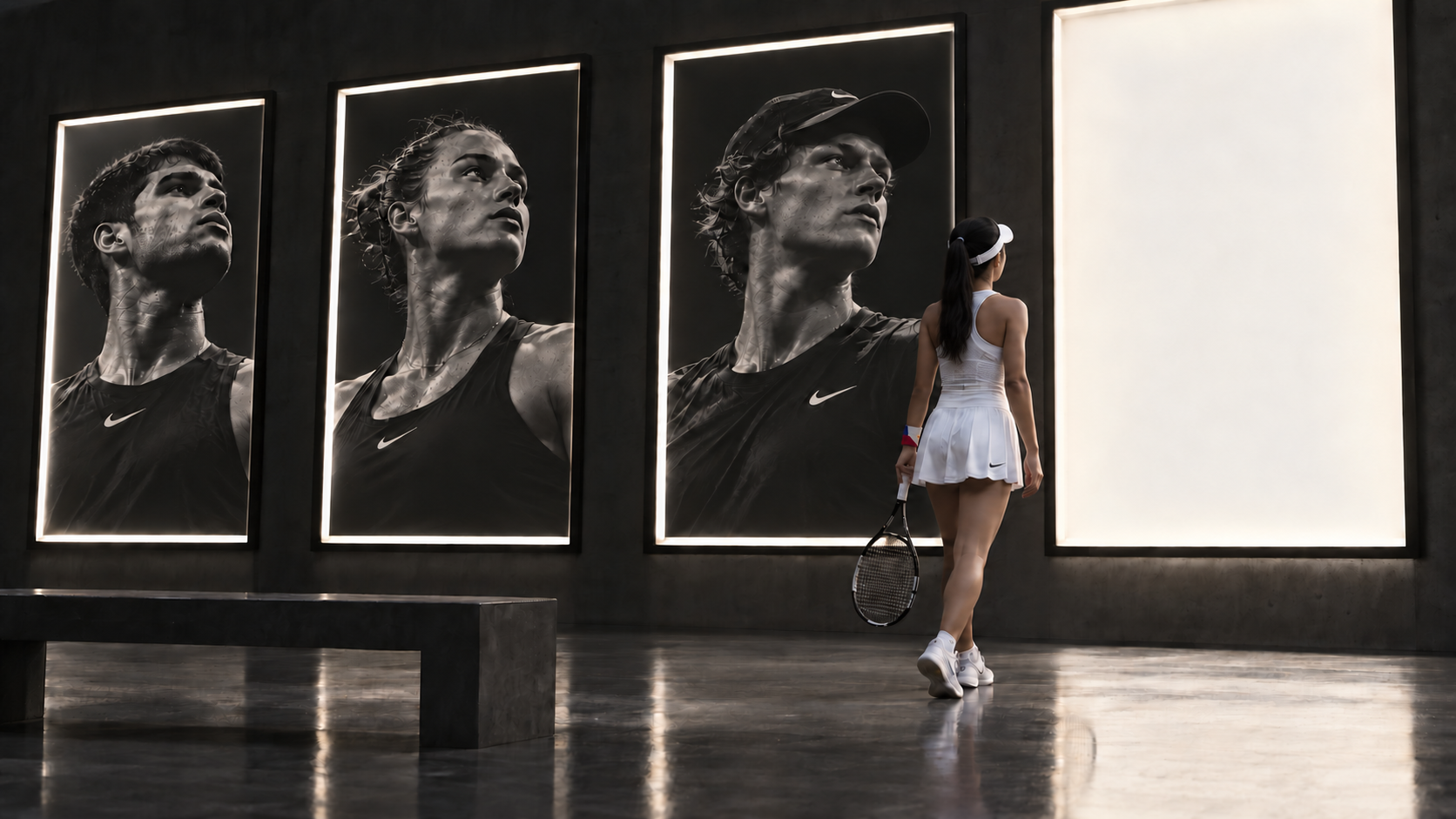
Nike says greatness is a choice, not an outcome. Alex Eala is where it has the opportunity to prove it.
Alex Eala walked onto court at the US Open wearing Nike and carrying two other companies with her.
Globe Telecom on one side. The Bank of the Philippine Islands on the other.
I assumed the patches meant Nike had not gone all in on her. Apparently, it is more complicated than that. Nike reportedly gave Eala unusual permission to wear them and has already produced custom shoes and limited products for her.
Thats fine. But why isn't Nike making far more noise about Alex Eala?
Last year, Nike launched "Why Do It?", a campaign built around the idea that greatness is a choice rather than an outcome. Trying counts. Failing is part of the process. The courage to begin matters. It put LeBron James, Caitlin Clark, Carlos Alcaraz and Qinwen Zheng in the film. A film about uncertainty, starring people whose commercial relevance is already certain.
This is not hypocrisy. Nike is not a charity and global campaigns are expensive. It makes sense to place famous people in them.
But belief becomes considerably easier once the trophies have arrived.
Eala's proof is arriving now. She is the first Filipino to win a WTA singles title, has beaten some of the best players in the world and attracts crowds to practice sessions. Her Toronto debut sold out shortly after her match was announced. At the DC Open, apparently 80 percent of ticket requests was for her match.
This is normally where somebody opens a presentation and starts discussing the population of the Philippines. But Eala is bigger than a demographic slide. She has the thing sports brands spend years trying to manufacture: people care before the marketing band wagons are on full throttle.
The comparison with Alcaraz is tempting. Its not an apples to apples comparison. The one stark difference from a marketing lens is that Alcaraz is already a multiple Grand Slam champion.
For now.
But they share a striking commonality. They're from that unique crop of players that no matter how many times you watched them in the past and no matter how skewed the scoreline might be, they make you want to watch the next point.
Both have flair, nerve and the sense that the court might become slightly less predictable while they are on it.
Nike has noticed Eala. But it needs to be less subtle.
A major global campaign built around her now would say more about "Why Do It?" than another montage of established champions. Her story still contains the possibility that it may not end with seven Grand Slams and a personal logo. The safest time for Nike to make Alex Eala a global face will be after she wins a Grand Slam.
It will also be the least Nike thing Nike could do.