A Golfer And Their Caddie Are Two Small Businesses Sharing A Tee Time
Behind every individual athlete is an unusually complicated company.

Jim 'Bones' Mackay says a golf caddie can spend between $40,000 and $50,000 a year on flights, hotels and other working expenses.
He may receive a weekly fee and a share of the player's winnings but he may also discover on Sunday evening that he no longer has a job on Monday morning.
Golf calls this a player-caddie partnership. Economically, it can resemble two small businesses sharing a tee time.
The same strange company appears across individual sport.
A tennis player can be ranked among the best 100 people in the world at their job and still have a cash-flow problem. Prize money may look impressive until the coach, physio, agent, flights, hotels, equipment and taxes come into play.
Athletics contains an even stranger job description: the professional pacemaker.
A pacemaker can run almost as fast as the athlete trying to win the marathon. But they are not being paid to win. They are hired to deliver a particular speed, protect the leading athlete from the wind and take the race to a predetermined point before quietly blending into the background.
It is elite performance sold as a service.
In 2019, Reuben Kipyego was hired to pace the Abu Dhabi Marathon. He ignored the usual ending, kept running and won. Basically the corporate equivalent of a temp turning a two hour assignment into a hostile take over. Nameplate on the door while the ex-CEO is still catching his breath.
Behind the idea of the 'individual athlete' is therefore an unusually complicated company. The athlete is its product, chief executive and most fragile piece of machinery. Around them sits a collection of other individuals, each with their own expenses, uncertain income and career risk.
The governing bodies design the calendar, rankings, qualification systems and prize-money structures under which these companies operate. That should carry some responsibility. Minimum-income guarantees, collective insurance, shared travel arrangements and portable benefits should not be radical ideas in businesses built around constant international movement.
The athlete has responsibility too, although 'employer' is not always the right word.
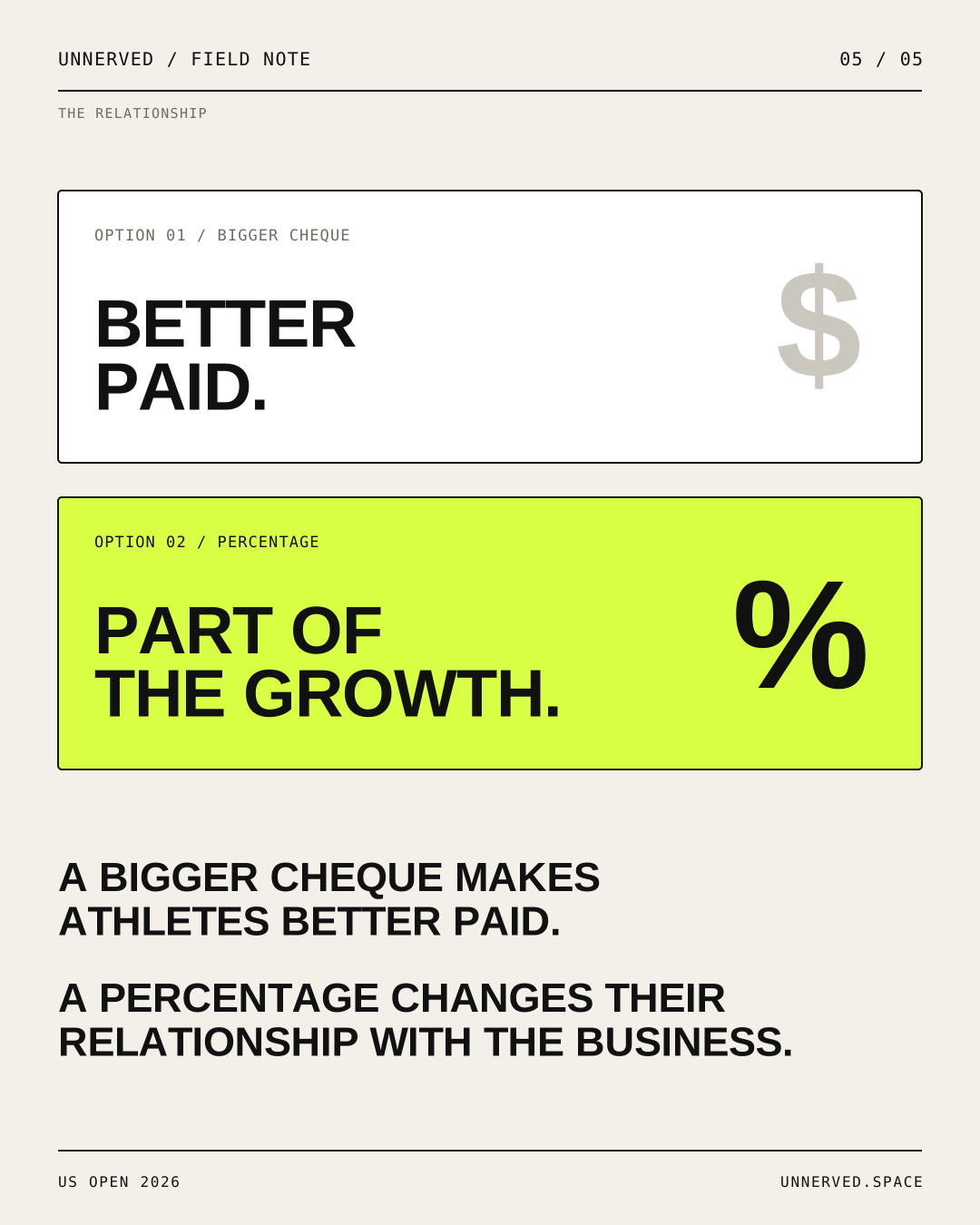
A coach may have a contract. A physio could work on a retainer. An agent takes commission. Meanwhile, the caddie beside them could still be working week to week. It is a small network of contracts orbiting one person, with different levels of protection depending on who negotiated what.
The governing body designs the market. The athlete builds an operation inside it.
The harder question is how responsibility should be divided between them. What basic protections could make careers around individual athletes less precarious, without pretending that every coach, caddie or physio belongs on a conventional payroll?
That matters to the athlete too. If reliable support is only available to those wealthy enough to absorb years of uncertainty, individual sport is not simply selecting for talent.
Sport calls them independent. That should not mean everyone is on their own.